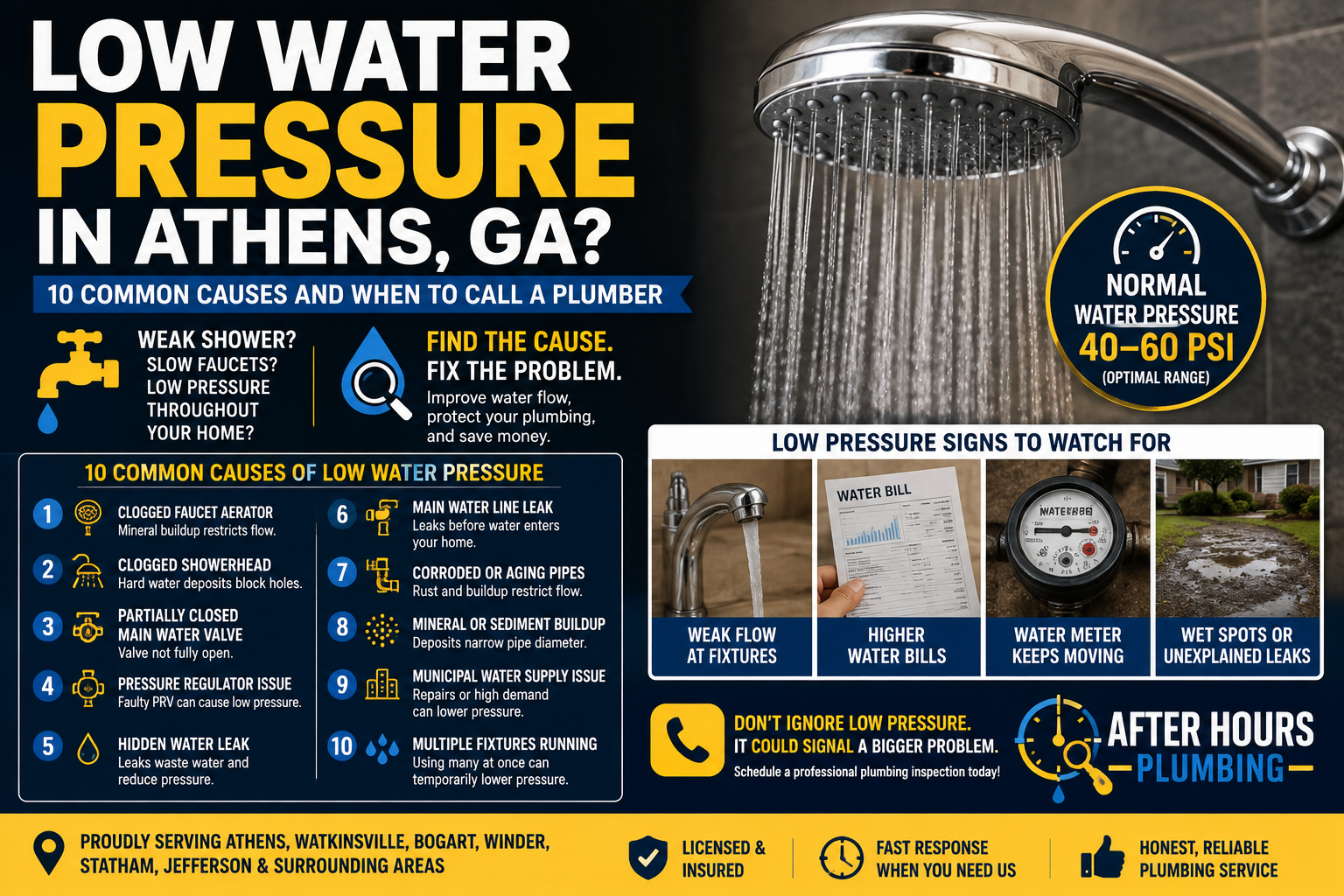
Weak water pressure can make even simple everyday tasks frustrating.
A shower that barely rinses shampoo from your hair, a kitchen faucet that takes forever to fill a pot, or a washing machine that seems slower than normal may all point to a plumbing problem.
For homeowners in Athens, GA, low water pressure can have several possible causes. Some are limited to one fixture, while others can affect the entire house.
The key is figuring out whether you have a small fixture problem or a larger issue involving your home's plumbing system.
At After Hours Plumbing, we help homeowners throughout Athens and surrounding communities diagnose low water pressure and determine what is actually causing the problem.
Here are 10 common reasons your home's water pressure may suddenly feel weak.
1. A Clogged Faucet Aerator
If only one faucet has weak pressure, the problem may be surprisingly simple.
Most faucets have a small screen called an aerator attached to the end of the spout.
Over time, mineral deposits, sediment, and debris can collect inside the aerator and restrict water flow.
Removing and cleaning the aerator may restore normal flow. However, if multiple fixtures are affected, the issue is probably farther upstream.
- One faucet has low pressure while others work normally
- Water sprays unevenly
- Flow has gradually weakened
- White mineral buildup is visible
2. A Clogged Showerhead
A showerhead can develop the same type of mineral buildup.
Hard-water deposits can partially block the small openings where water exits.
Cleaning or replacing the showerhead may solve the problem if the issue is isolated to one bathroom. But if the sink, toilet, and other fixtures in the same area also have low pressure, there may be a plumbing issue beyond the showerhead.
- Weak shower pressure
- Water spraying in strange directions
- Some showerhead openings not working
- White or chalky deposits
3. A Partially Closed Main Water Valve
Your home's main water shutoff valve controls water entering the plumbing system.
If the valve is not fully open, water flow can be restricted. This can sometimes happen after plumbing repairs, water-heater service, emergency shutoff, home renovations, or previous maintenance.
A partially closed valve may cause low water pressure throughout the entire house. Before adjusting any valve, make sure you know what it controls and whether it appears to be functioning properly. Older valves can become damaged or difficult to operate.
4. A Water Pressure Regulator Problem
Some homes use a pressure-reducing valve, often called a PRV, to regulate incoming water pressure. The PRV helps keep water pressure within an appropriate range for the plumbing system.
If the regulator begins failing, pressure may become too low, too high, inconsistent, or different throughout the day.
A failing pressure regulator can affect multiple fixtures throughout the home. Because proper diagnosis requires measuring actual water pressure, a plumber can test the system with a pressure gauge and determine whether the PRV is functioning correctly.
5. A Hidden Water Leak
Low pressure can sometimes indicate a leaking water line. If water is escaping before it reaches your fixtures, the available pressure inside the home may decrease.
If low pressure appears together with unexplained water usage, professional leak detection in Athens, GA may be needed.
- Under sinks
- Behind walls
- Under floors
- In crawlspaces
- Underground
- Beneath concrete slabs
- Along the main water service line
- Higher water bills
- Damp spots
- Water stains
- Musty odors
- Wet areas in the yard
- The sound of water running
- Water-meter movement when fixtures are off
6. A Main Water Line Leak
The water service line carries water from the municipal supply toward your home. If that pipe develops a leak, pressure throughout the house may decrease.
Because the main water line is often underground, the problem may not be immediately visible. A professional plumber can help determine whether the issue is inside your home or along the underground supply line.
- Low pressure at many fixtures
- Unexplained increases in water bills
- Soggy areas in the yard
- Standing water
- Unusually green patches of grass
- Water-meter activity
- Reduced water flow
7. Corroded or Aging Plumbing Pipes
Older plumbing systems may gradually restrict water flow. Corrosion can build up along the interior walls of certain types of pipes, narrowing the available space for water to move through.
The result may be progressively weaker pressure. If an older home has multiple plumbing symptoms, repairing one isolated section may not always address the larger problem. A plumber can evaluate whether targeted repair or more extensive pipe replacement should be considered.
- Discolored water
- Frequent leaks
- Visible corrosion
- Metallic taste
- Repeated repairs
- Weak pressure throughout the house
8. Sediment or Mineral Buildup Inside Plumbing
Minerals naturally present in water can accumulate inside plumbing components. Over time, this buildup may affect faucets, showerheads, valves, water-heater connections, supply lines, and pipe interiors.
The severity depends on the water supply, plumbing materials, and age of the system. Gradual pressure loss may sometimes be related to accumulated deposits rather than a sudden break or leak.
9. Problems With the Municipal Water Supply
Not every pressure problem originates inside your house. Temporary low pressure may sometimes be related to water-main work, utility repairs, high neighborhood demand, municipal system maintenance, or temporary supply problems.
If your neighbors are experiencing the same issue, the problem may be outside your property. However, if only your home has low pressure, your plumbing system should be inspected.
10. Multiple Fixtures Are Being Used at Once
Some homes experience noticeable pressure drops when several fixtures operate simultaneously. For example, someone may take a shower while the washing machine fills, the dishwasher runs, a toilet flushes, or an outdoor hose is being used.
A slight change can be normal. But a dramatic loss of pressure may indicate restricted piping, an undersized supply, a valve problem, or another plumbing issue. If the pressure becomes extremely weak anytime multiple fixtures run, further evaluation may be worthwhile.
Is the Low Water Pressure in One Fixture or the Whole House?
This is one of the first things you should determine.
If only one faucet or shower is affected, the problem may involve the aerator, showerhead blockage, fixture cartridge problems, a local supply valve, or a supply line.
If several fixtures in one bathroom or section of the house have weak pressure, the problem may involve piping supplying that area.
Whole-house pressure problems may involve the main shutoff valve, PRV, main water line, hidden leak, aging plumbing, or municipal supply. The more fixtures affected, the more likely the problem is located farther upstream.
How Do Plumbers Test Water Pressure?
A professional plumber can use a pressure gauge to measure the pressure entering your plumbing system. This provides actual data instead of relying on how strong the shower feels.
Testing may help determine whether pressure entering the house is low, the PRV is malfunctioning, pressure drops significantly when fixtures are used, or the issue may involve restricted or leaking plumbing. A plumber may also compare pressure at different points in the system.
Can High Water Pressure Cause Low Pressure Later?
Indirectly, yes. Excessively high water pressure can place stress on supply lines, faucet cartridges, toilet components, appliance connections, valves, and plumbing fittings.
Over time, that stress may contribute to leaks or component failures. A properly functioning pressure regulator helps protect the plumbing system from excessive pressure.
Why Did My Water Pressure Suddenly Drop?
A sudden pressure change deserves more attention than a gradual change. Possible causes include a new leak, a partially closed valve, PRV failure, main-line damage, utility work, or a plumbing blockage.
If you experience a sudden whole-home pressure drop without an obvious explanation, contact a plumber in Athens, GA.
Can a Water Leak Cause Low Pressure?
Yes. Water pressure depends on water staying inside the plumbing system until it reaches the intended fixture. If water is escaping from a damaged pipe, pressure may be affected.
A substantial leak can create a noticeable drop throughout the home. Low pressure combined with a high water bill is especially worth investigating.
Can a Bad Water Heater Cause Low Hot-Water Pressure?
If only your hot-water pressure is weak, the issue may involve the water-heating side of the plumbing system. Potential causes can include sediment buildup, restricted valves, plumbing corrosion, water-heater connections, or piping problems.
If cold-water pressure is strong but hot-water pressure is weak throughout the home, tell your plumber. That detail can help narrow down the cause.
What Should Normal Water Pressure Feel Like?
Pressure should generally feel consistent and strong enough for normal household use without being excessively forceful. The exact acceptable pressure range can depend on the plumbing system and local conditions.
Instead of guessing, the best approach is to have the pressure measured with a gauge.
Can Low Water Pressure Damage Plumbing?
Low pressure itself is usually more of a symptom than a source of damage. The real concern is why the pressure is low.
If the cause is a hidden leak, damaged main line, corroded piping, or failing regulator, ignoring the issue could allow the underlying problem to become worse.
Should You Install a Water Pressure Booster?
A booster system is not the first solution for every low-pressure problem. Before increasing pressure, you should determine why the pressure is low.
Installing a booster without correcting a leak, restriction, or failing valve would not address the real problem. Professional diagnosis should come first.
When Should You Call a Plumber for Low Water Pressure?
Contact a professional if your entire home has low pressure, pressure suddenly dropped, your water bill increased, you notice wet areas, the meter moves when water is off, several fixtures have weak flow, pressure changes constantly, you suspect a main-line leak, your home has older plumbing, or the problem keeps returning.
How After Hours Plumbing Diagnoses Low Water Pressure
The diagnostic process may include asking where pressure is weak, comparing hot and cold water, checking multiple fixtures, measuring incoming pressure, inspecting shutoff valves, evaluating the pressure regulator, looking for visible leaks, checking for hidden leak symptoms, evaluating the main water line, and inspecting older plumbing when appropriate.
The goal is to identify the actual cause rather than simply increasing pressure without knowing why the problem exists.
Need Help With Low Water Pressure in Athens, GA?
If your shower pressure has suddenly become weak, faucets barely flow, or your entire home is experiencing low water pressure, After Hours Plumbing can help.
We provide professional plumbing service throughout Athens, Watkinsville, Bogart, Winder, Statham, Jefferson, and surrounding Northeast Georgia communities.
Whether the problem is a pressure regulator, leak, aging pipe, main water line, or another plumbing issue, our goal is to diagnose the source and recommend the right solution.
Contact After Hours Plumbing today for water pressure repair and plumbing service in Athens, GA.
Frequently Asked Questions
- Why is my shower pressure suddenly low? Possible causes include showerhead buildup, a valve problem, plumbing restriction, hidden leak, PRV failure, or another system-wide pressure issue.
- Why is my hot-water pressure lower than my cold-water pressure? The problem may involve the water heater, hot-water piping, valves, mineral buildup, or another restriction on the hot-water side.
- Can a leaking main water line cause low pressure? Yes. A significant underground water-line leak may reduce pressure before the water reaches your fixtures.
- How do I know if my pressure regulator is bad? Possible symptoms include unusually low pressure, high pressure, inconsistent pressure, or changes throughout the day. A plumber can test the incoming pressure and evaluate the regulator.
- Should I worry if only one faucet has low pressure? The issue may simply involve the faucet aerator or local supply components. If multiple fixtures are affected, the problem may be more significant.
- Can old pipes cause low water pressure? Yes. Corrosion and buildup inside aging pipes can restrict water flow and gradually reduce pressure.
Related Services & Local Links
Explore the services mentioned in this article:
- Leak Detection — Athens, GA
- Plumber — Athens, GA
- Emergency Plumber — Athens, GA
- Water Heater Repair — Athens, GA
- Drain Cleaning — Athens, GA
- Fixture Installation
- Plumber — Athens-Clarke County, GA
- Leak Detection — Athens-Clarke County, GA
- Emergency Plumber — Athens-Clarke County, GA
- Water Heater Repair — Athens-Clarke County, GA