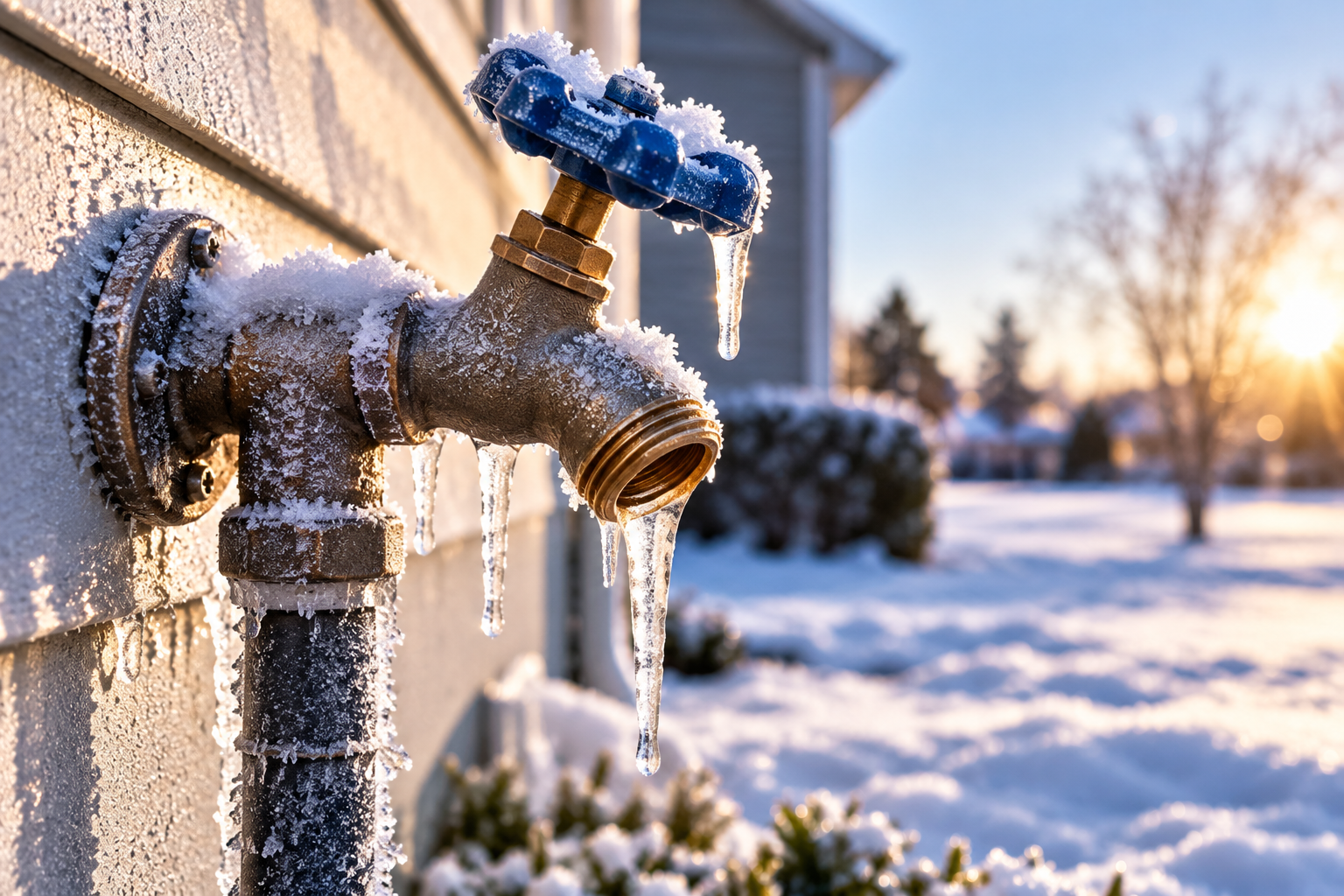
Winter weather in Monroe, Georgia, can bring freezing temperatures that put residential plumbing systems at risk. Even though Northeast Georgia generally experiences milder winters than northern states, a sudden cold snap can cause exposed water pipes to freeze, crack, or burst.
Frozen pipes can lead to expensive water damage, particularly when a pipe begins leaking after temperatures rise. If that happens, our guide on what to do when a pipe bursts can help you limit the damage.
At After Hours Plumbing, we want Monroe homeowners to know how to protect their plumbing before the next freeze. Here are nine practical winter plumbing tips that can help reduce the risk of frozen pipes.
1. Disconnect Outdoor Garden Hoses
Leaving a garden hose connected to an outdoor faucet during freezing weather can trap water inside the hose and faucet assembly. When that water freezes, it can damage the faucet or connected plumbing.
Before temperatures drop:
- Disconnect all outdoor hoses.
- Drain remaining water from the hoses.
- Store hoses in a protected location.
- Check outdoor faucets for existing leaks.
This simple step can help prevent an unexpected plumbing repair.
2. Protect Outdoor Faucets
Outdoor hose bibs are particularly vulnerable because they're exposed to cold air. Insulated faucet covers can help reduce heat loss during short freezes.
If your home has a dedicated interior shutoff valve for an outdoor faucet, shutting off and draining that line may provide additional protection when done correctly.
3. Insulate Exposed Water Pipes
Pipes in unheated areas are at greater risk of freezing. Common problem areas include crawl spaces, garages, attics, and exterior walls.
Proper pipe insulation helps reduce heat loss, although insulation alone cannot guarantee protection during extended freezing weather.
If you're unsure which pipes need additional protection, a professional plumber can inspect vulnerable areas.
4. Keep Your Home Heated
If you're leaving town during winter, don't shut off your home's heating system completely. Maintaining adequate indoor heat can help protect plumbing inside conditioned spaces.
Remember that pipes inside exterior walls may be much colder than the temperature displayed on your thermostat.
5. Open Cabinets Beneath Sinks
Kitchen and bathroom sinks located against exterior walls may contain plumbing exposed to colder temperatures. Opening cabinet doors during freezing weather allows warm indoor air to circulate around the pipes.
Keep cleaning products and other hazardous materials away from children and pets when cabinet doors are open.
6. Allow a Small Amount of Water to Flow When Appropriate
During severe cold, allowing a small amount of water to run through a vulnerable faucet may help reduce freezing risk.
However, this isn't a replacement for insulation or proper winterization, and it won't prevent every frozen pipe.
7. Seal Cold Air Leaks Around Plumbing
Cold drafts entering through gaps around pipes can increase freezing risk. Inspect plumbing penetrations in crawl spaces, utility rooms, and exterior walls.
Appropriate air sealing can help protect pipes and improve energy efficiency.
8. Locate Your Main Water Shutoff Valve
If a pipe bursts, shutting off the water quickly can help limit damage. Every homeowner should know where the main water shutoff valve is located and how to operate it — see our guide to main water shut-off valve problems.
Don't wait until water is flooding your home to find it.
9. Repair Plumbing Problems Before Freezing Weather
Existing leaks, damaged outdoor faucets, and exposed water lines deserve attention before winter. A professional plumbing inspection — including leak detection — can identify issues that may become more serious during freezing temperatures.
What Should You Do if a Pipe Freezes?
If a faucet suddenly produces little or no water during freezing weather, a frozen pipe may be responsible. Take these precautions:
- 1. Shut off the main water supply if you suspect a burst or damaged pipe.
- 2. Open the affected faucet when appropriate to relieve pressure.
- 3. Use only safe, gentle warming methods on accessible pipes.
- 4. Never use a torch, open flame, or other dangerous heat source.
- 5. Contact a professional plumber if the pipe is inaccessible or damaged.
A frozen pipe may not begin leaking until the ice melts, so continue monitoring for water damage. If water is spraying or pooling, call for emergency plumbing right away.
Frequently Asked Questions
At what temperature do pipes freeze in Georgia?
Water freezes at 32°F, but whether a pipe freezes depends on its exposure, insulation, and the duration of cold weather.
Can pipes freeze overnight in Monroe, GA?
Yes. Exposed or poorly insulated pipes may freeze during a sufficiently cold night.
Do outdoor faucet covers really work?
Insulated covers can reduce heat loss, but they don't guarantee protection during prolonged severe cold.
Can a frozen pipe burst without leaking immediately?
Yes. A damaged pipe may remain blocked by ice and begin leaking when temperatures rise.
Should I call a plumber for frozen pipes?
If you suspect a burst pipe, cannot safely access the frozen section, or notice water damage, contact a professional plumber.
Frozen Pipe Repair and Winter Plumbing Help in Monroe, GA
Frozen pipes can quickly become a serious problem for homeowners.
Whether you're dealing with exposed water lines, a leaking outdoor faucet, or a suspected burst pipe, After Hours Plumbing can help evaluate the problem and recommend the appropriate repair.
We serve homeowners in Monroe, Athens, Watkinsville, Bogart, Winder, and surrounding Northeast Georgia communities — see all of our service areas.
Contact After Hours Plumbing for professional frozen pipe and winter plumbing assistance in Monroe, GA. Call (706) 248-5934 — available 24/7.
Related Services & Local Links
Explore the services mentioned in this article: