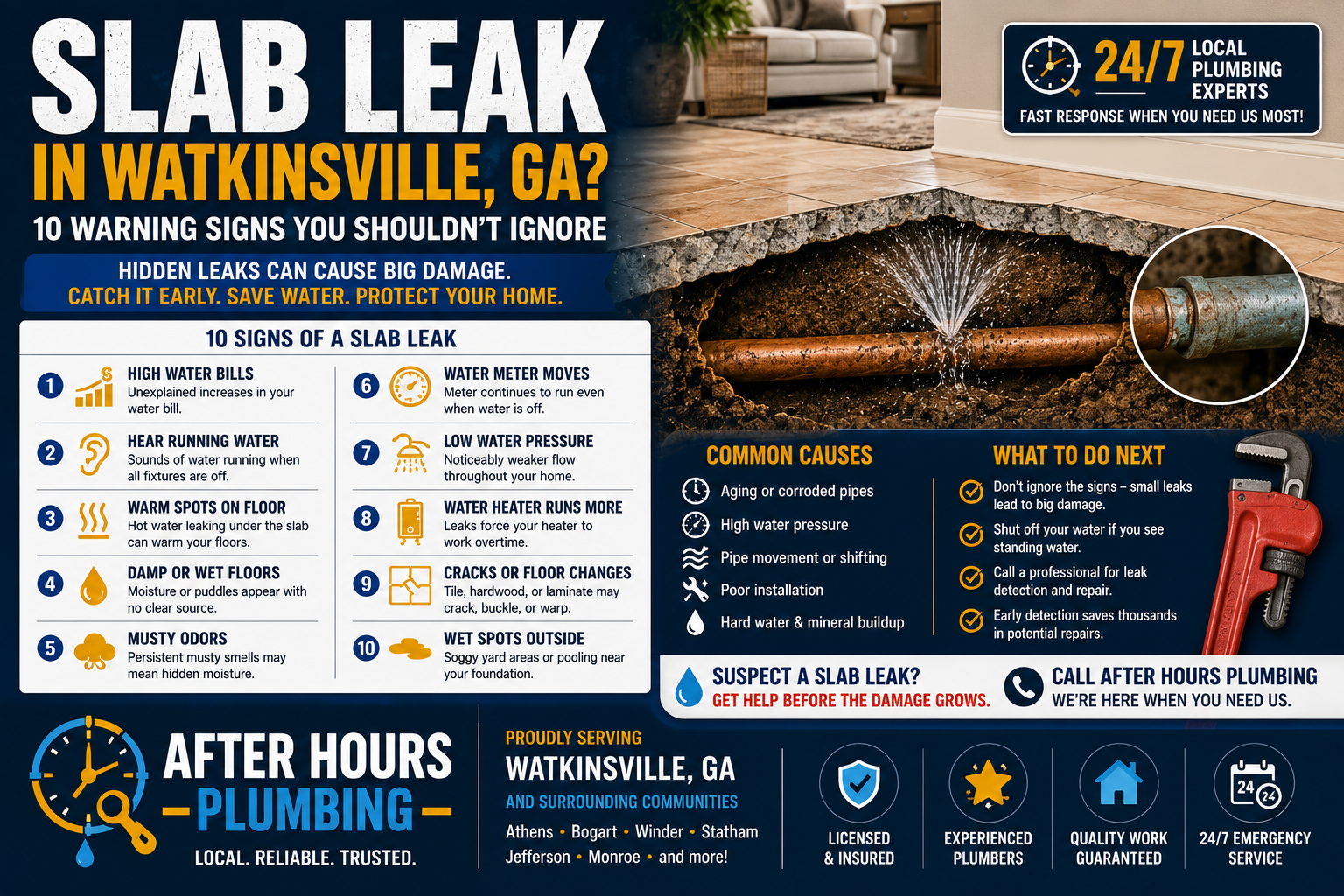
Some of the most serious plumbing leaks are the ones you cannot see.
A pipe can leak underneath a home's concrete foundation for days or even weeks before obvious water appears inside.
This type of plumbing problem is commonly called a slab leak.
For homeowners in Watkinsville, Georgia, recognizing the early warning signs of a slab leak can help reduce water waste and limit the amount of damage caused by hidden moisture.
At After Hours Plumbing, we help homeowners identify plumbing leaks and determine the best way to address them.
Here are 10 warning signs that may indicate water is leaking beneath your home's slab.
What Is a Slab Leak?
Many homes are constructed on a concrete slab foundation. Water-supply pipes may run beneath or through portions of the slab.
If one of those pipes develops a crack, pinhole, damaged fitting, or other failure, water may escape beneath the foundation.
The leak itself may remain hidden. Instead, homeowners notice secondary symptoms.
- Higher water bills
- Warm flooring
- Wet spots
- Musty odors
- Low water pressure
- Running-water noises
- Water-meter activity
1. Your Water Bill Goes Up for No Clear Reason
A sudden increase in water usage is one of the most important warning signs of any hidden leak.
If your household routine has not changed but your water bill suddenly increases, water may be escaping somewhere in the plumbing system.
If you cannot find a visible source, professional leak detection in Watkinsville, GA may be worthwhile.
- Running toilet
- Leaking faucet
- Underground service-line leak
- Irrigation leak
- Water-heater leak
- Slab leak
2. You Hear Running Water When Nothing Is On
Turn off all faucets and water-using appliances. The home should become relatively quiet.
If you continue hearing water flowing, hissing, or spraying, a pipe may be leaking somewhere out of sight.
A hidden leak under the foundation may produce sounds that seem to come from floors, walls, cabinets, or utility areas.
Running-water sounds combined with high water bills are especially concerning.
3. Part of the Floor Feels Warm
A warm spot on the floor can sometimes indicate a leaking hot-water line. As hot water escapes under the concrete, heat can transfer upward through the slab and flooring.
Warm flooring does not always mean a slab leak. However, if the warm area is persistent and unexplained, it deserves attention.
- One section of tile feels warm
- A hallway floor is warmer than surrounding rooms
- An area stays warm even when sunlight is not hitting it
- The water heater runs more often
4. Flooring Becomes Damp or Wet
A hidden leak may eventually allow water to migrate upward. Depending on the flooring material, you might notice damp carpet, dark spots, warped hardwood, loose laminate, discolored grout, moisture near walls, or swollen flooring.
The visible wet area may not be located directly above the damaged pipe. Water can travel beneath flooring before becoming noticeable.
5. You Smell a Musty Odor
Persistent moisture can create a damp or musty smell. You may notice it around baseboards, carpet, cabinets, closets, interior walls, or flooring transitions.
If cleaning and ventilation do not eliminate the odor, hidden moisture may be present. A plumbing leak is one possible source.
6. Your Water Meter Moves When Everything Is Off
Your water meter can help identify unexplained usage. Turn off known water-using fixtures and appliances, then check the meter.
If it continues registering water use, there may be a leak. Before assuming the problem is a slab leak, remember that automatic systems can also use water.
- Irrigation
- Ice makers
- Water treatment equipment
- Automatic pool fillers
7. Your Water Pressure Drops
A leaking supply line may reduce available pressure. You may notice a weaker shower, slow-filling sinks, lower pressure throughout the home, or pressure dropping when multiple fixtures operate.
Low pressure can have many causes, including pressure regulator problems, main water line issues, closed valves, corroded pipes, or hidden leaks. Low pressure alone does not confirm a slab leak, but combined symptoms can be significant.
8. Your Water Heater Runs More Than Normal
A leak on a hot-water line may cause the water heater to operate more frequently. Hot water escaping under the slab must be replaced by newly heated water.
If several of these symptoms appear together, have the plumbing system evaluated.
- Water heater cycles more often
- Hot water does not last as long
- Energy bills increase
- Warm flooring appears
- Water usage increases
9. You See Water Near the Foundation
Some underground leaks can produce moisture near the exterior edge of the home. Look for wet soil, persistent puddles, unusual dampness, water near the foundation, extremely green patches of grass, or moisture during dry weather.
These symptoms can also come from irrigation or drainage problems. Professional diagnosis can help determine whether the source is plumbing-related.
10. Flooring Starts Warping or Buckling
Water exposure can affect many flooring materials. Possible warning signs include hardwood cupping, laminate swelling, loose tiles, discoloration, separated flooring, or damaged baseboards.
If flooring begins changing without an obvious spill or appliance leak, moisture may be coming from below.
What Causes Slab Leaks?
There is no single cause. Several conditions can contribute to underground pipe failure.
Aging Pipes
Pipe materials can weaken over time. Older systems may become more vulnerable to corrosion, pinhole leaks, weak joints, or pipe deterioration.
High Water Pressure
Excessive water pressure increases stress throughout a plumbing system. It can affect valves, supply lines, fittings, appliances, and pipes. Over time, high pressure may contribute to plumbing failures.
Pipe Movement
Hot-water piping expands when heated and contracts when cooled. Years of movement and friction can contribute to wear if a pipe rubs against surrounding materials.
Installation Problems
Plumbing installed improperly during construction may eventually fail. Possible issues include poorly made connections, pipes touching abrasive surfaces, damaged piping, or improper support.
Water Chemistry and Corrosion
Certain plumbing materials may corrode depending on water chemistry and installation conditions. As the pipe wall weakens, small leaks can develop.
Is a Slab Leak an Emergency?
Not every slab leak causes immediate flooding. However, a pressurized water-line leak can continue running around the clock. That means water may escape while you're at work, while you're sleeping, or while you're away—every hour until the leak is repaired.
Contact a plumber in Watkinsville, GA promptly if you suspect a slab leak. If significant water is entering the home or causing rapid damage, shutting off the main water supply may be necessary.
Can a Slab Leak Damage My Home?
Water can damage more than the plumbing pipe itself. Possible consequences include damage to flooring, drywall, cabinets, trim, personal belongings, insulation, and building materials.
Persistent moisture may also create conditions that allow mold or mildew growth. The severity depends on the size, location, and duration of the leak.
How Do Plumbers Find Slab Leaks?
Finding a hidden leak involves narrowing down the source. A plumber may review your symptoms, check the water meter, measure water pressure, inspect visible plumbing, compare hot and cold water systems, isolate different plumbing lines, listen for water movement, or use specialized leak-detection equipment when appropriate.
The goal is to gather enough information to locate the problem as accurately as possible before recommending repair.
Do You Have to Tear Up the Entire Floor?
Not necessarily. Modern leak-detection methods can often help narrow down the likely location before invasive work begins.
The exact repair method depends on pipe location, plumbing material, accessibility, condition of surrounding pipes, and number of previous leaks. In some cases, a localized repair may be appropriate. In other cases, rerouting plumbing may make more sense.
How Are Slab Leaks Repaired?
Several repair strategies may be considered depending on the situation.
Direct Pipe Repair
The damaged pipe may be accessed and repaired directly. This may require opening part of the floor.
Pipe Rerouting
A plumber may sometimes abandon the leaking underground section and route a replacement line through a more accessible area.
Repiping
If the slab leak is one of several failures in an aging plumbing system, broader pipe replacement may be worth considering. The right option depends on the overall condition of the plumbing.
Slab Leak vs. Main Water Line Leak
These problems can have similar symptoms.
A slab leak usually involves a water line under the home's foundation. Possible symptoms include warm floors, indoor moisture, running-water sounds, and high bills.
A main water line leak usually involves the underground pipe bringing water from the meter toward the home. Possible symptoms include wet yard, low pressure, and high bills.
Professional testing can help determine which section is leaking.
Can a Slab Leak Cause a High Water Bill?
Yes. A leaking pressurized water line can waste water continuously. Even a relatively small leak can add significant usage over time. If your bill suddenly rises without a lifestyle change, investigate the cause.
Can a Slab Leak Cause Low Water Pressure?
Yes, depending on the size and location of the leak. Water escaping from a supply line can reduce the amount of pressure available at your fixtures.
Can a Slab Leak Cause Mold?
Persistent moisture can create conditions that support mold growth. The presence and extent depend on how long the leak has been present, where the moisture travels, what materials become wet, and indoor conditions. That is another reason hidden leaks should be addressed promptly.
How Can You Help Prevent Slab Leaks?
Not all leaks are preventable, but homeowners can reduce risk by staying alert.
- Watch your water bill and know your normal monthly usage.
- Address high water pressure—excessive pressure can stress plumbing.
- Repair leaks promptly—repeated small leaks can sometimes indicate aging plumbing.
- Pay attention to flooring changes and do not ignore unexplained warm spots, dampness, or warping.
- Know where your shutoff valve is located—fast water shutoff can reduce damage during a serious leak.
When Should You Call After Hours Plumbing?
Call if you notice a sudden water bill increase, warm floors, wet flooring, running-water noises, low water pressure, water-meter activity, foundation moisture, musty odors, or repeated leaks.
The sooner the source is identified, the sooner you can stop unnecessary water loss.
Need Slab Leak Detection in Watkinsville, GA?
If you suspect water is leaking beneath your foundation, After Hours Plumbing can help.
We provide professional plumbing and leak-detection services throughout Watkinsville, Athens, Bogart, Winder, Statham, Jefferson, and surrounding Northeast Georgia communities.
Whether the issue is a slab leak, main water line, aging pipe, pressure problem, or another hidden plumbing leak, our goal is to identify the cause and recommend the appropriate solution.
Contact After Hours Plumbing today for slab leak detection and plumbing repair in Watkinsville, GA.
Frequently Asked Questions
- What is the most common sign of a slab leak? A sudden unexplained increase in water usage is one of the most common warning signs. Warm floors, running-water sounds, moisture, and meter movement are also important clues.
- Can a slab leak happen without visible water? Yes. Many slab leaks remain hidden for some time before moisture becomes visible inside the home.
- Why does my floor feel warm in one spot? A warm area may indicate hot water leaking beneath the slab, although other heat sources should also be considered.
- Will my water meter move if I have a slab leak? It may. If a pressurized plumbing line is leaking continuously, the meter may register water use even when fixtures are turned off.
- How quickly should a slab leak be repaired? Hidden leaks should be investigated promptly because water may continue escaping until the problem is repaired.
- Does one slab leak mean I need to repipe my house? Not necessarily. One isolated leak may be repairable. Multiple leaks or widespread pipe deterioration may justify discussing repiping or rerouting options.
Related Services & Local Links
Explore the services mentioned in this article:
- Leak Detection — Watkinsville, GA
- Plumber — Watkinsville, GA
- Emergency Plumber — Watkinsville, GA
- Leak Detection — Athens, GA
- Plumber — Athens, GA
- Water Heater Repair — Athens, GA
- Emergency Plumber — Athens, GA
- Leak Detection — Athens-Clarke County, GA
- Plumber — Athens-Clarke County, GA
- Emergency Plumber — Athens-Clarke County, GA