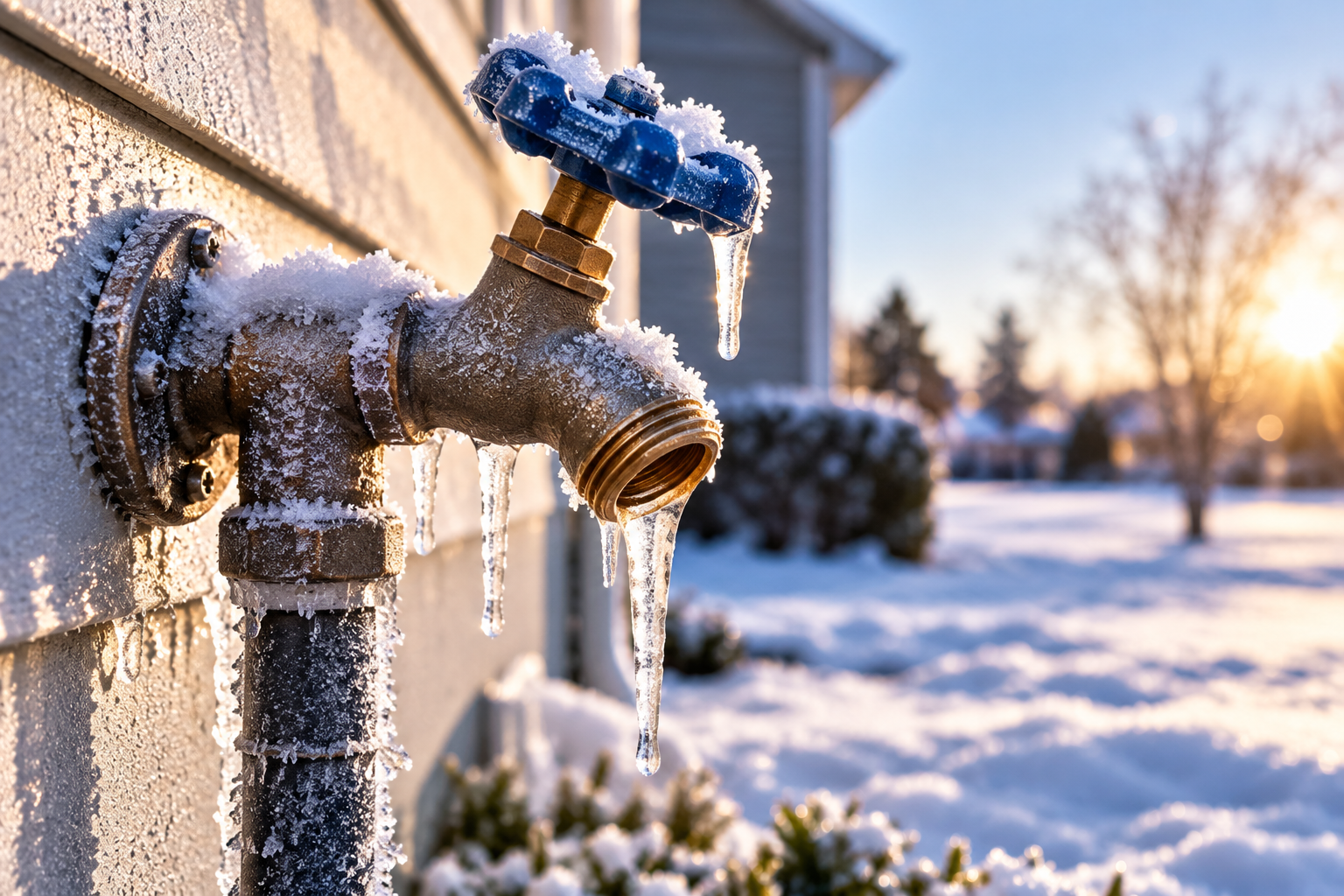
Protect Exposed Plumbing Before a Freeze
Inspect accessible supply pipes in unheated spaces and repair visible leaks before freezing weather. Use insulation and freeze-protection products suited to the installation and follow their manufacturer instructions.
Disconnect garden hoses and prepare outdoor faucets according to their design. If a faucet has a separate indoor shut-off and drain, follow the manufacturer instructions rather than assuming every outdoor faucet uses the same winterizing method.
Check Shut-Off Access and Indoor Heating
Know where the main water shut-off is located and keep its access clear. Do not force a valve that is stuck or visibly damaged. Arrange a plumbing inspection before you need to use it in an emergency.
Maintain safe indoor heating during cold weather, including while away. Where appropriate, allow warm indoor air to reach plumbing inside cabinets; keep household chemicals away from children and pets.
If Water Stops Flowing or a Pipe Leaks
A frozen pipe may be blocked before it becomes visibly damaged. Do not use an open flame to thaw it, and do not handle electrical heating equipment near water. Contact a qualified professional if the pipe is inaccessible or its condition is uncertain.
For an active leak, close the water supply if safe. Stay away from standing water near electrical equipment. Suspected gas leaks require leaving the building and calling the gas utility or emergency services from a safe location.
Inspect Again After Temperatures Rise
Check accessible connections, outdoor faucets and previously frozen areas for leakage as temperatures rise. Look for damp ceilings, unusual water use or reduced pressure. Hidden damage can become apparent only after water flow returns.